Are the fish behaving differently?
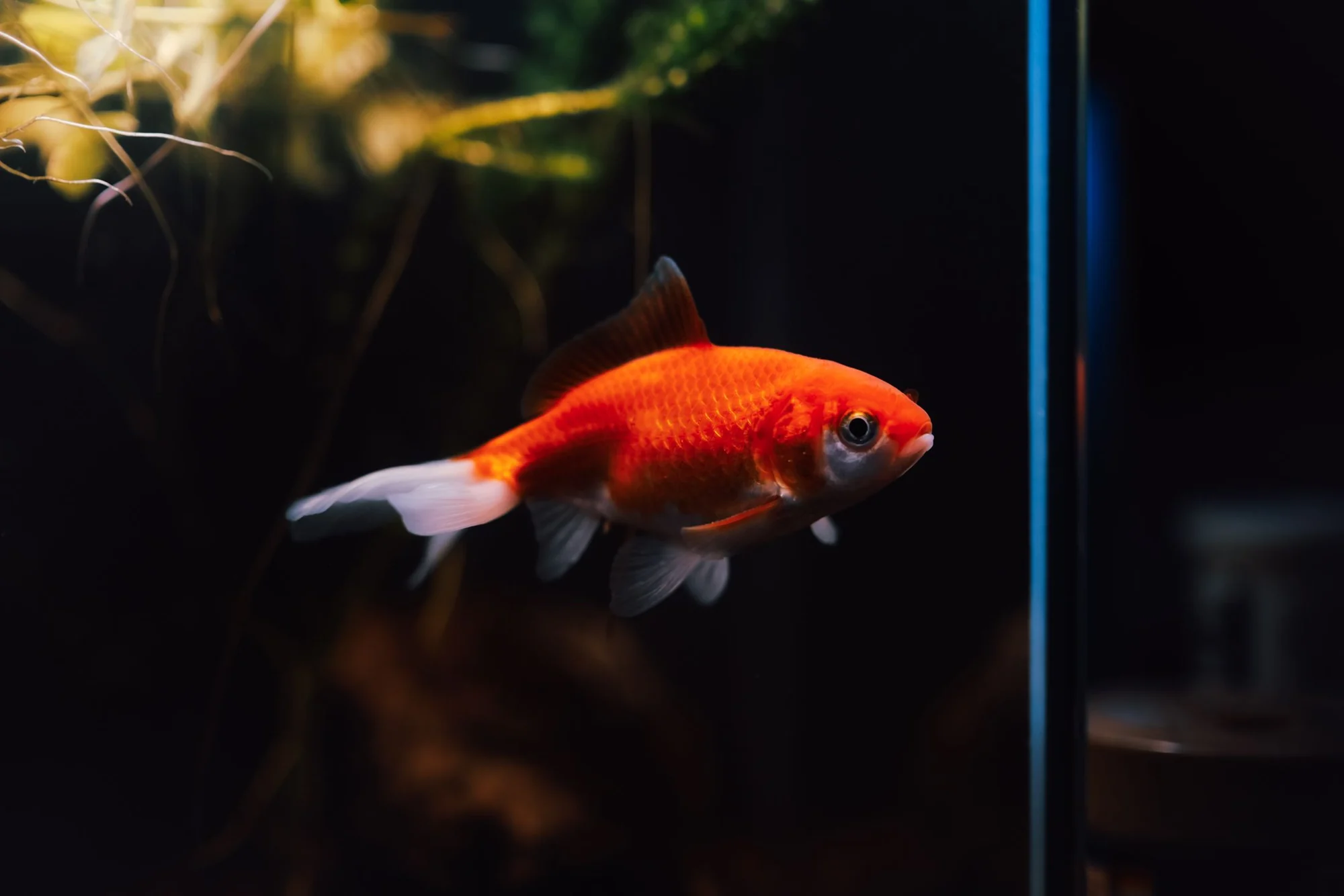
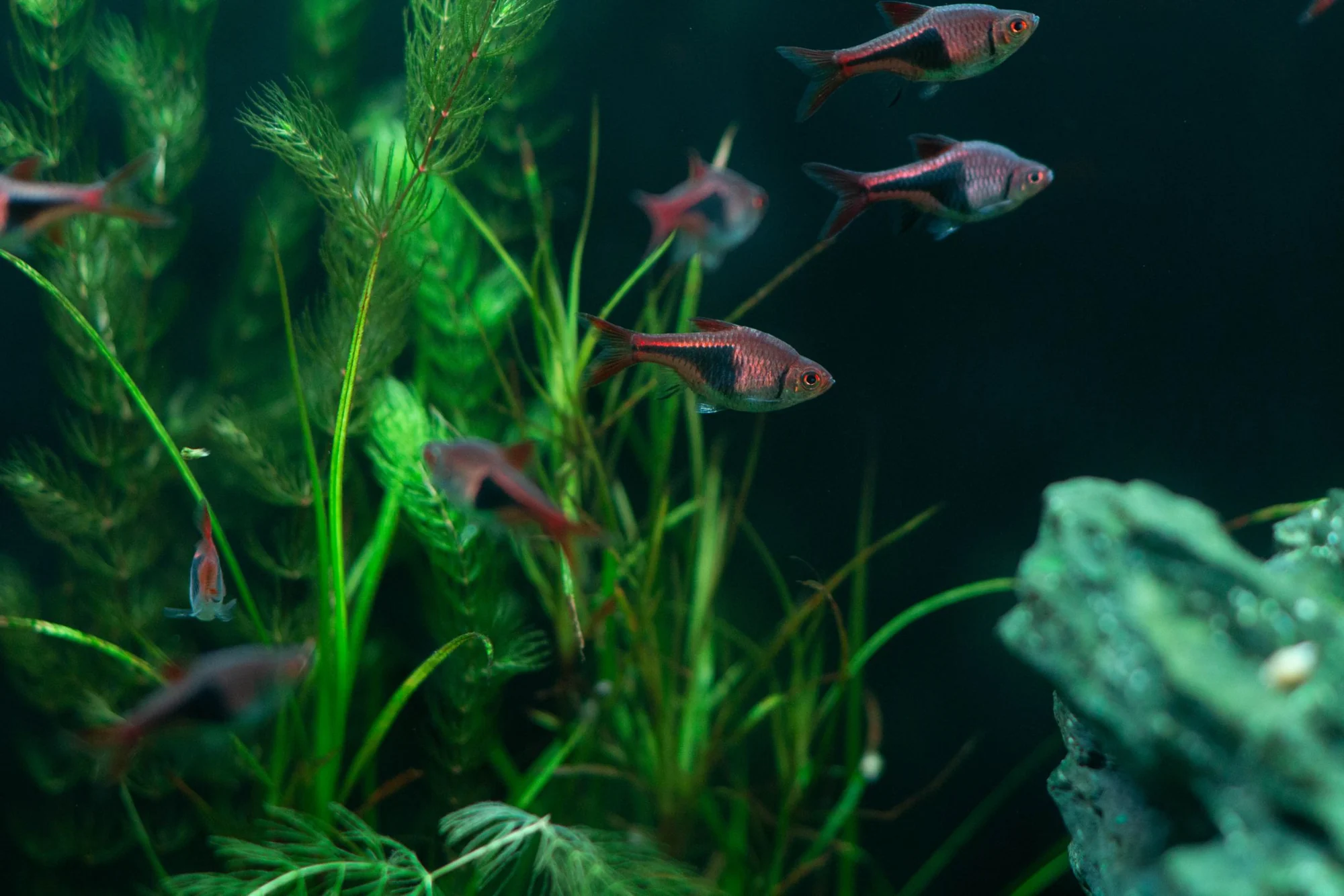
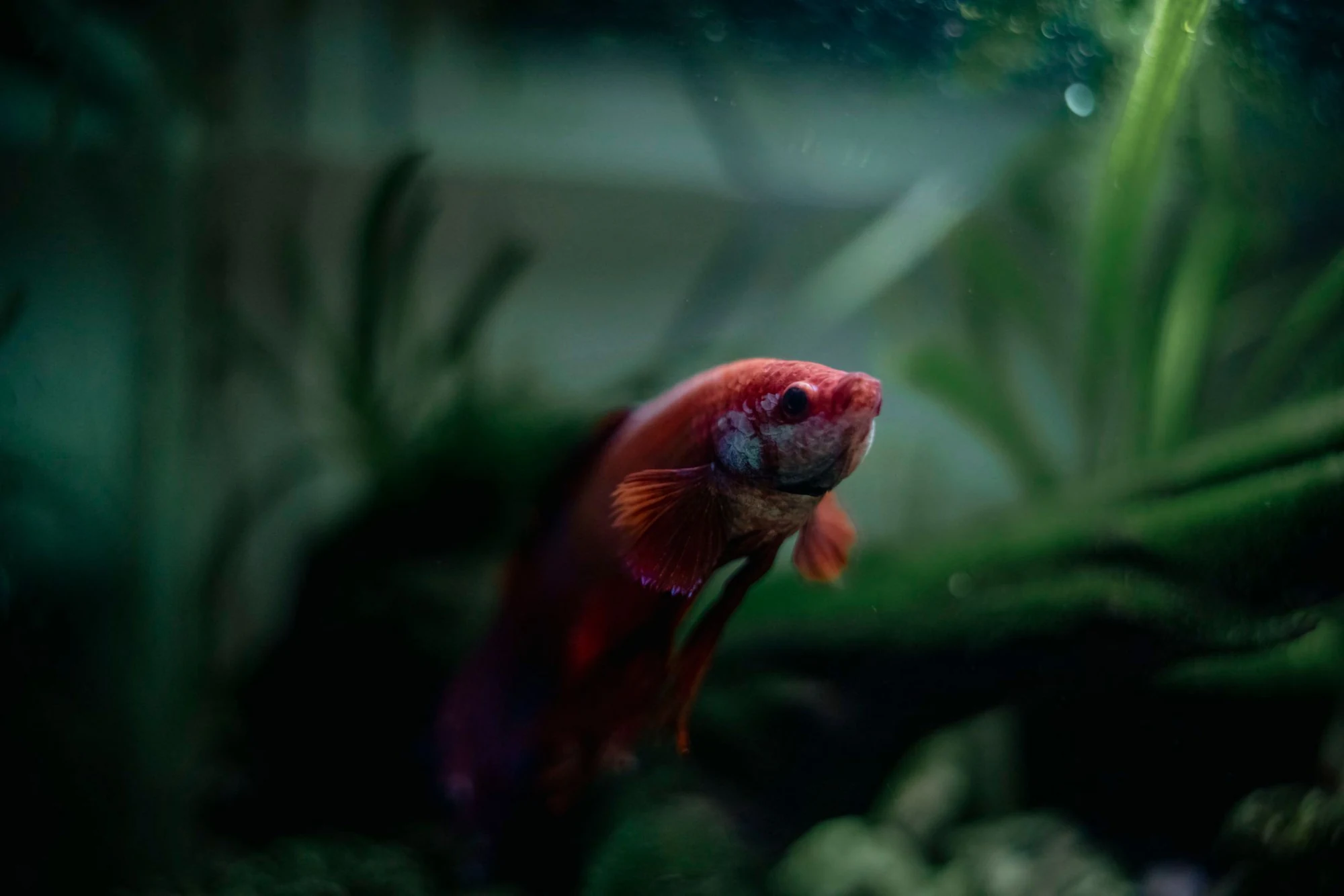
Watch before opening the lid or feeding. Compare breathing, balance and swimming with the animals' normal behaviour. Rapid breathing, a sudden gathering at the surface, collapse or several fish deteriorating together are reasons to use the urgent-help checks and contact a fish veterinarian promptly. A photograph of milky water cannot tell you whether oxygen or water chemistry is safe.
Check that the filter is moving water and that aeration equipment is working. Look for a disconnected airline, blocked intake or unusually warm tank. A bacterial bloom can increase oxygen demand. Restore failed circulation or aeration safely while arranging help if fish are distressed. Do not cover the problem with a clarifier and postpone checking the animals.
Cloudy just after a water change? Reconstruct that change.
Write down when cloudiness began: during refilling, immediately afterwards or later. Note substrate disturbance, new decorations, filter work, food, supplements and the source of replacement water. Include what conditioner you used and whether its instructions covered your water supply. Chlorine and chloramine treatment is product-specific; leaving water standing is not a dependable substitute for an appropriate conditioner.
If the tap water itself looks white, put a fresh sample in a clear glass away from the aquarium. Water that clears from the bottom upwards can contain tiny air bubbles, according to the UK Drinking Water Inspectorate. This observation does not test for disinfectants or establish that the water is suitable for fish. Persistent unusual source-water cloudiness or odour deserves a call to the supplier.
Sources: API ↗ Drinking Water Inspectorate ↗
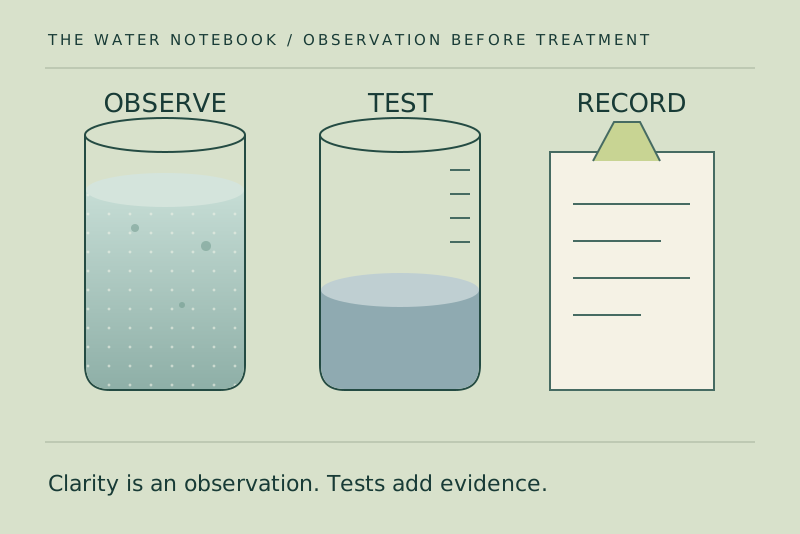
Use appearance to choose a check, not a treatment.
Different causes can overlap. Use this table to decide what to investigate, then compare it with the timeline and test results. White water alone does not prove a harmless new-tank bloom.
| Observation | Possible explanation | Useful next check |
|---|---|---|
| Particles after moving gravel or adding material | Suspended dust or debris | Check what was disturbed and whether mechanical filtration is flowing. |
| White source water that clears upwards in a glass | Entrained air | Observe a separate fresh sample; still prepare replacement water correctly. |
| Milky water after setup, extra feeding or decaying material | Microbial growth | Check ammonia, nitrite, circulation and possible organic waste. |
| Water looks green in a clear sample | Suspended algae | Review light exposure and nutrient readings; colour alone cannot identify an organism. |
| Cloudiness after mineral or buffer additions | Chemical precipitation | Record products and actual chemistry; do not counter-dose by guesswork. |
Sources: Seachem ↗ Drinking Water Inspectorate ↗
Make the next hour useful.
First, record the fish observations and equipment checks. Next, test aquarium water using the kit's directions: ammonia, nitrite, pH and temperature are useful initial records. Include nitrate and relevant hardness or marine measurements in the wider investigation. Write down the value, unit, time and whether the sample came from the aquarium or source water. Keep a photograph of the result alongside the number.
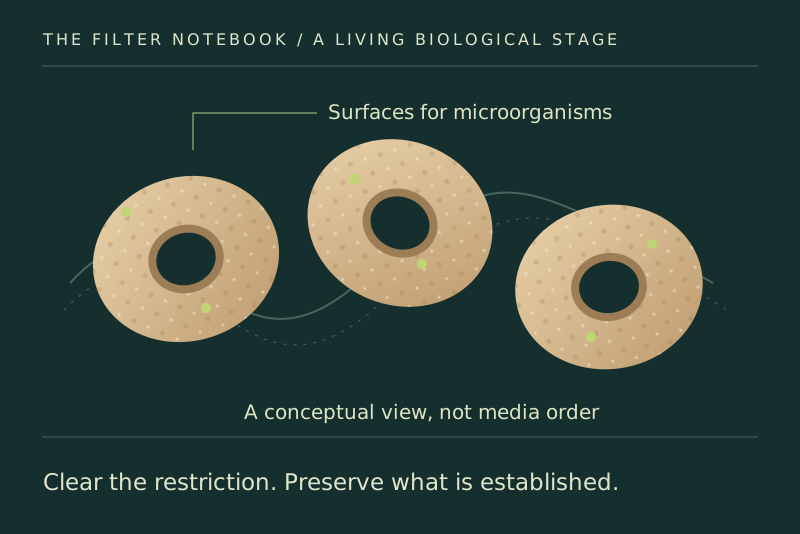
Then inspect for a specific waste source: uneaten food, a dead leaf, a missing animal or accumulated debris. Remove an identified problem carefully. Review the feeding that produced leftovers rather than adding more food to see whether the fish will eat. Check a restricted filter, but preserve its established biological media when cleaning. Delay new livestock additions while the problem is unresolved.
Finally, write down the intervention and what you will reassess. Changing the light, replacing media, adding chemicals and emptying the tank together makes the cause harder to identify. Respond promptly to distressed fish and record each action as you go.
Should I change the water again?
That depends on the readings, livestock and what went wrong. Water changes can remove dissolved waste, but repeated changes made only to improve the view may leave the cause untouched. Advice to let a new-tank bloom settle must not override abnormal fish behaviour or harmful water readings. Clear water is not the endpoint if ammonia or nitrite remains detectable.
If a water change is needed, prepare suitable replacement water before draining. Account for disinfectant treatment, temperature and, in marine systems, salinity. Record the amount changed and recheck the problem reading. This guide cannot choose a safe emergency amount for every aquarium.
An old, poorly maintained aquarium needs particular care. Merck describes how depleted buffering and low pH can coexist with accumulated ammonia; abruptly changing the chemistry can make ammonia more toxic. Seek an individual correction plan rather than trying to reset a neglected aquarium in one large clean-out.
Sources: Aqueon ↗ OATA ↗ API ↗ Merck Veterinary Manual ↗
Do I need a water clarifier?
Not as the first diagnostic step. A particle-binding product can help suitable mechanical filtration collect fine material, but making water look clearer does not demonstrate safe chemistry or an established biological filter. Work out which job you need a product to do before spending money.
Read the exact label for the animals and treatments in your tank. For example, Tetra CrystalWater's published instructions exclude invertebrates and set restrictions involving high ammonia or nitrite and medicines. That is one product's guidance, not a rule for every clarifier. Do not combine products or assume a bottle advertised for aquariums is suitable for shrimp, snails or a medicated tank.
How long should it take to clear?
The next step depends on what changed and how the fish and readings are trending. If particles appeared while you disturbed substrate, and fish behaviour, flow and tested chemistry remain stable, compare visibility as the filtration runs. If breathing worsens, flow fails or readings deteriorate, act on that change and seek advice promptly. Record the time between checks; different causes will not share one clearing time.
If cloudiness returns, use the log to look for a repeating event such as feeding, refilling or filter service. Persistent unexplained cloudiness, abnormal readings or changes in the fish justify advice even if the tank looks less dramatic. Send the veterinarian the tank history, actual results, products used and timing. Keep a dated care record with the readings and changes.
Manufacturer explanations are used alongside welfare and veterinary sources. Product claims do not establish a diagnosis or make every formulation suitable for every aquarium.
- RSPCA: Pet fish health ↗Behaviour and breathing changes warrant water-quality checks and appropriate veterinary assessment. Surface breathing is not treated as a diagnosis.
- Aqueon: How to fix cloudy water in a new and existing tank ↗New and established aquarium blooms, organic waste, oxygen demand, testing and possible causes. The commercial page's blanket reassurance, advice against water changes and stocking heuristic are not generalized.
- UF/IFAS: Introduction to fish health management ↗Observation, water quality, husbandry and the relationship between stress and fish health. No medication, diagnosis or pond visibility rule is adopted.
- API: TAP WATER CONDITIONER instructions ↗Chlorine and chloramine treatment has label-specific instructions. No product dose or all-species endorsement is reproduced.
- Drinking Water Inspectorate: White or cloudy water ↗A separate tap-water glass that clears from the bottom upwards can indicate air bubbles; persistent unusual source water merits supplier contact. Human drinking-water reassurance is not used as evidence of aquarium suitability.
- Seachem: Guide to cloudy aquarium water ↗Distinguishes possible suspended dust, bacterial growth, algae and precipitation. Appearance is used as a clue, not definitive identification; branded remedies are not prescribed.
- OATA: Testing freshwater aquarium water quality ↗Testing, disinfectants and the fact that clear water can still contain harmful substances. No universal water-change percentage is adopted.
- Fluval: Filter media cleaning ↗Reduced flow, media functions and preserving established biological media during maintenance. Branded replacement intervals are not generalized.
- Merck Veterinary Manual: Management of aquarium fish ↗Water-quality investigation and old-tank chemistry: abrupt pH correction can increase ammonia toxicity. No veterinary dose, buffer plan or medication is copied.
- Tetra: CrystalWater product instructions ↗An example of particle binding with product-specific invertebrate, medication and high-ammonia/nitrite restrictions. No dosing or recommendation to use the product.
- RSPCA: Choosing an aquarium for pet fish ↗Mechanical and biological filtration have different jobs; visible clarity is not proof of healthy water.