What is a glowlight tetra?
- Scientific name
- Hemigrammus erythrozonus; confirm the name when buying.
- Adult size
- About 4 cm (1.6 inches) is a useful planning figure; published measurements vary.
- Temperament
- Generally peaceful and social; plan suitable companions and a same-species group.
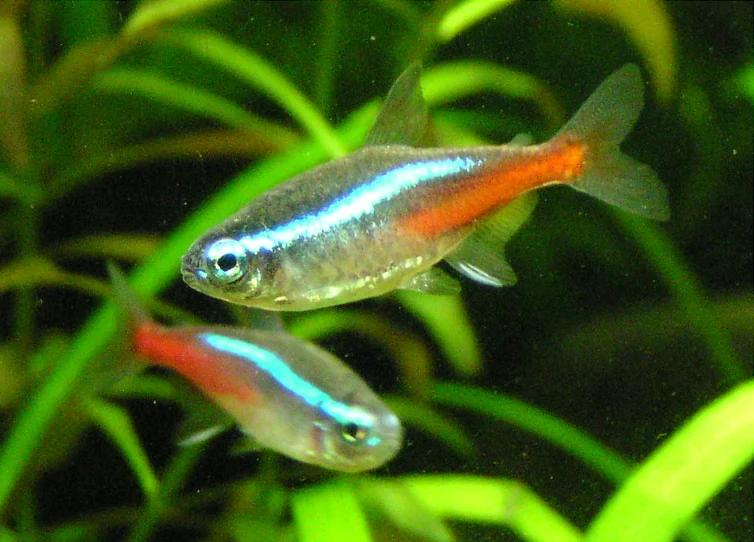
Hemigrammus erythrozonus is a small, transparent-to-silvery freshwater fish with a red or copper-colored stripe along its side. The U.S. Fish and Wildlife Service's species summary identifies its native range as the Essequibo River in Guyana and cites an adult length of about 4 cm. Its size source is qualified, so treat that figure as a planning reference rather than a promise about every fish.
Ask for the scientific name. A glowlight tetra is not a neon tetra, and a similar common name or bright stripe does not mean two fish have identical needs.
Sources: U.S. Fish and Wildlife Service ↗ Argentina agriculture ministry ↗
How many glowlight tetras, and what size tank?
Plan for at least ten glowlight tetras of the same species, with clear horizontal swimming space as well as sheltered areas. An Argentine government ornamental-fish guide recommends a group of ten or more and lists a 60 cm aquarium or 80 liters for this species. As a conservative starting plan, use both: approximately 80 liters (21 US gallons) and at least 60 cm (24 inches) in length.
Those figures are husbandry guidance, not a tested guarantee that any group and community will fit. Decorations reduce usable space, and other fish add waste and compete for room. Choose a larger aquarium when the group, companions or layout require it; do not use a fish-per-gallon rule.
Sources: Argentina agriculture ministry ↗ Ornamental Aquatic Trade Association ↗
What water conditions do they need?
Use a heater and thermometer to keep the aquarium stable. The U.S. Fish and Wildlife Service summary cites 24–28°C (about 75–82°F) as an aquarium temperature reference. Confirm the conditions of the fish you are buying and the needs of any companions before choosing a stable setting.
Published pH guidance differs: the U.S. summary cites 6.0–8.0, while the Argentine species guide lists 5.5–8.0. These are reported ranges, not proof that every fish will thrive at every endpoint. Test your source water and ask about the supplier's conditions; avoid sudden changes or adding chemicals just to chase a number.
Before adding fish, establish the biological filter with a fishless cycle. Test ammonia and nitrite and wait until both are zero. Continue testing ammonia, nitrite and nitrate, especially after stocking changes. Treat replacement tap water for chlorine or chloramine and keep its temperature appropriate for the aquarium.
Sources: U.S. Fish and Wildlife Service ↗ Argentina agriculture ministry ↗ Ornamental Aquatic Trade Association ↗ RSPCA ↗
How should the aquarium be arranged?
Provide plants or other aquarium-safe cover alongside an open swimming area. A gentle flow, suitable filtration and a consistent light–dark routine help make the space usable. The species guide describes shaded areas or subdued light; the fish do not need every part of the aquarium to be dark.
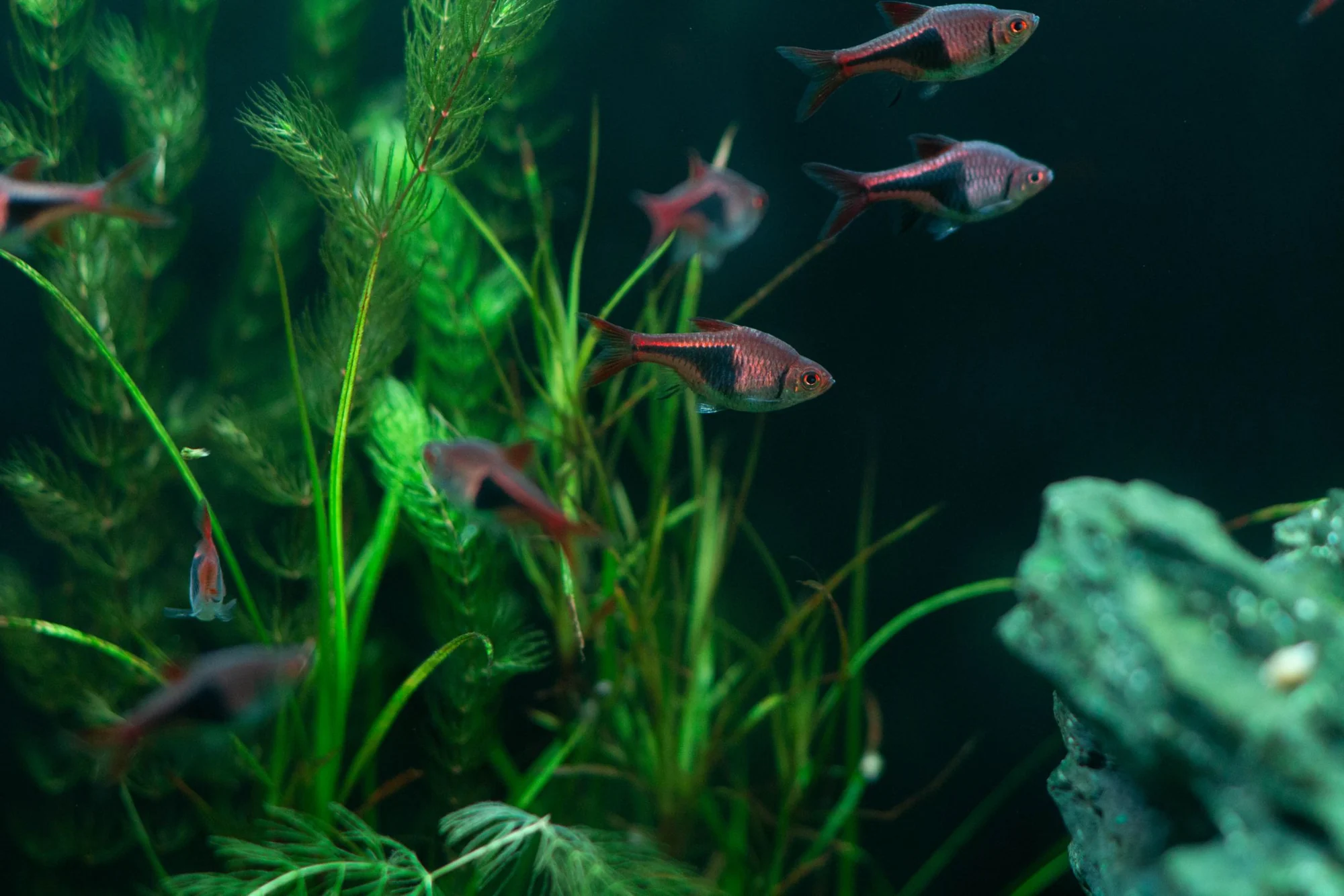
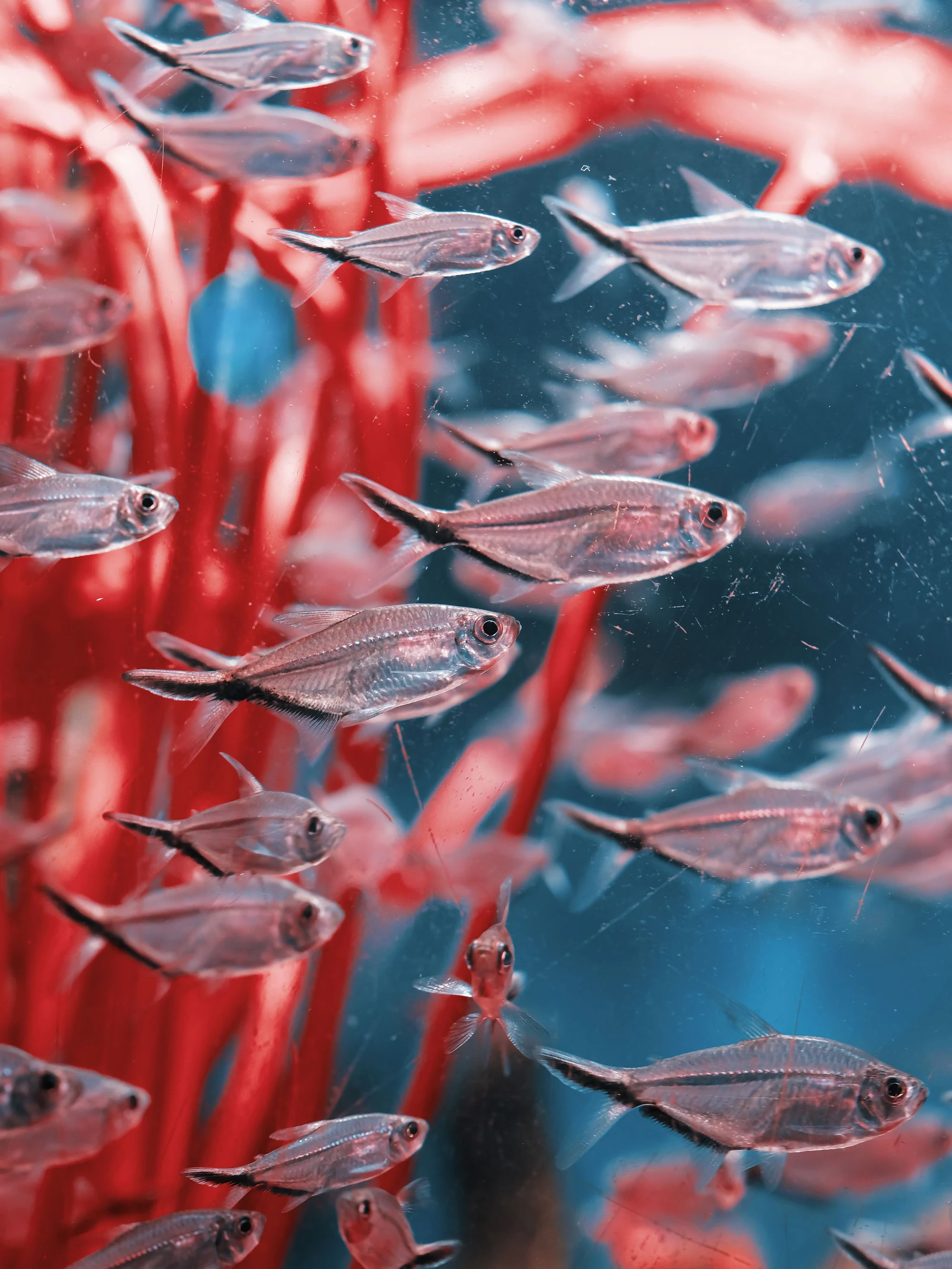
Wood or leaf litter can change the appearance and chemistry of water, but neither is required. If you use them, choose aquarium-safe material, monitor the water and avoid abrupt chemistry changes. The photograph above is a general shoal, not a picture used to identify this species.
Sources: Argentina agriculture ministry ↗ Ornamental Aquatic Trade Association ↗
Which tank mates are suitable?
Start with the glowlight group, then evaluate each proposed companion's adult size, temperament, group needs, water requirements and feeding behavior. Small, calm fish with compatible needs may be candidates in a sufficiently spacious aquarium, but no pairing is guaranteed.
Avoid fish large enough to swallow the tetras, and be cautious with aggressive, territorial or very boisterous companions. Watch for chasing, hiding and fish being excluded from food. Another tetra species is not a substitute for a group of glowlight tetras.
Sources: Argentina agriculture ministry ↗ Ornamental Aquatic Trade Association ↗
What do glowlight tetras eat?
Offer a suitable small-particle freshwater fish food that the fish can take, and vary the diet with appropriately sized frozen or live foods from a reliable source. The U.S. species summary describes an omnivorous natural diet that includes small invertebrates and plant material; OATA's broader tetra guidance discusses flake, granules and small live or frozen foods.
Feed modest amounts, watch that all fish have access, and remove uneaten food. Overfeeding can impair water quality. Adjust the amount to the fish and the food rather than assuming a universal portion.
Sources: U.S. Fish and Wildlife Service ↗ Ornamental Aquatic Trade Association ↗
What should I check if a fish looks unwell?
Notice changes such as rapid breathing, persistent hiding, clamped fins, loss of appetite or white spots. These signs have more than one possible cause; appearance alone does not establish a diagnosis. Test the water promptly and seek advice from an aquatic veterinarian. If fish are gasping, improve aeration or surface movement while investigating the cause, without creating a current that overwhelms them.
Discuss quarantine and observation for new fish with an aquatic veterinarian or experienced specialist before mixing them into the established aquarium. UF/IFAS describes ich as highly contagious and notes that diagnosis and treatment depend on the organism's life cycle. Do not add medication or change temperature sharply based on a guess.
Sources: Ornamental Aquatic Trade Association ↗ UF/IFAS ↗ UF/IFAS ↗
Can glowlight tetras breed in a community tank?
Glowlight tetras scatter eggs, and adults may eat eggs or fry. The Argentine species guide describes a separate breeding setup; OATA notes that general tetra breeding is unlikely to be very successful in a community aquarium.
Breeding and raising fry require a separate, researched plan for water quality, protection and appropriately tiny food. Do not abruptly alter a community aquarium's water to trigger spawning.
Sources: Argentina agriculture ministry ↗ Ornamental Aquatic Trade Association ↗
This guide was drafted and checked by the same AI assistant against the linked government, animal-welfare and aquarium-trade sources. It has not received an independent expert or veterinary review and does not claim hands-on testing. Species-specific housing advice is guidance, not a controlled stocking trial; the OATA sheet covers tetras and pencilfish as a broader group.
- U.S. Fish and Wildlife Service: Glowlight tetra ecological risk screening summary ↗Species identity, Essequibo distribution, reported size and water ranges, and natural diet.
- Argentina agriculture ministry: Ornamental fish reference, glowlight tetra section ↗Species-specific group, aquarium, temperature, pH, behavior, shelter and reproduction guidance on printed pages 36–37.
- Ornamental Aquatic Trade Association: How to look after tetras and pencilfish ↗General tetra group care, filtration, water testing, food, compatibility and warning signs.
- RSPCA: Choosing an aquarium for pet fish ↗General aquarium setup, cycling and fish welfare.
- UF/IFAS: Ich infections in fish ↗Ich transmission, diagnostic limits and the importance of its life cycle.
- UF/IFAS: Fish health in recirculating systems ↗Water quality and aeration considerations when fish show signs of distress.