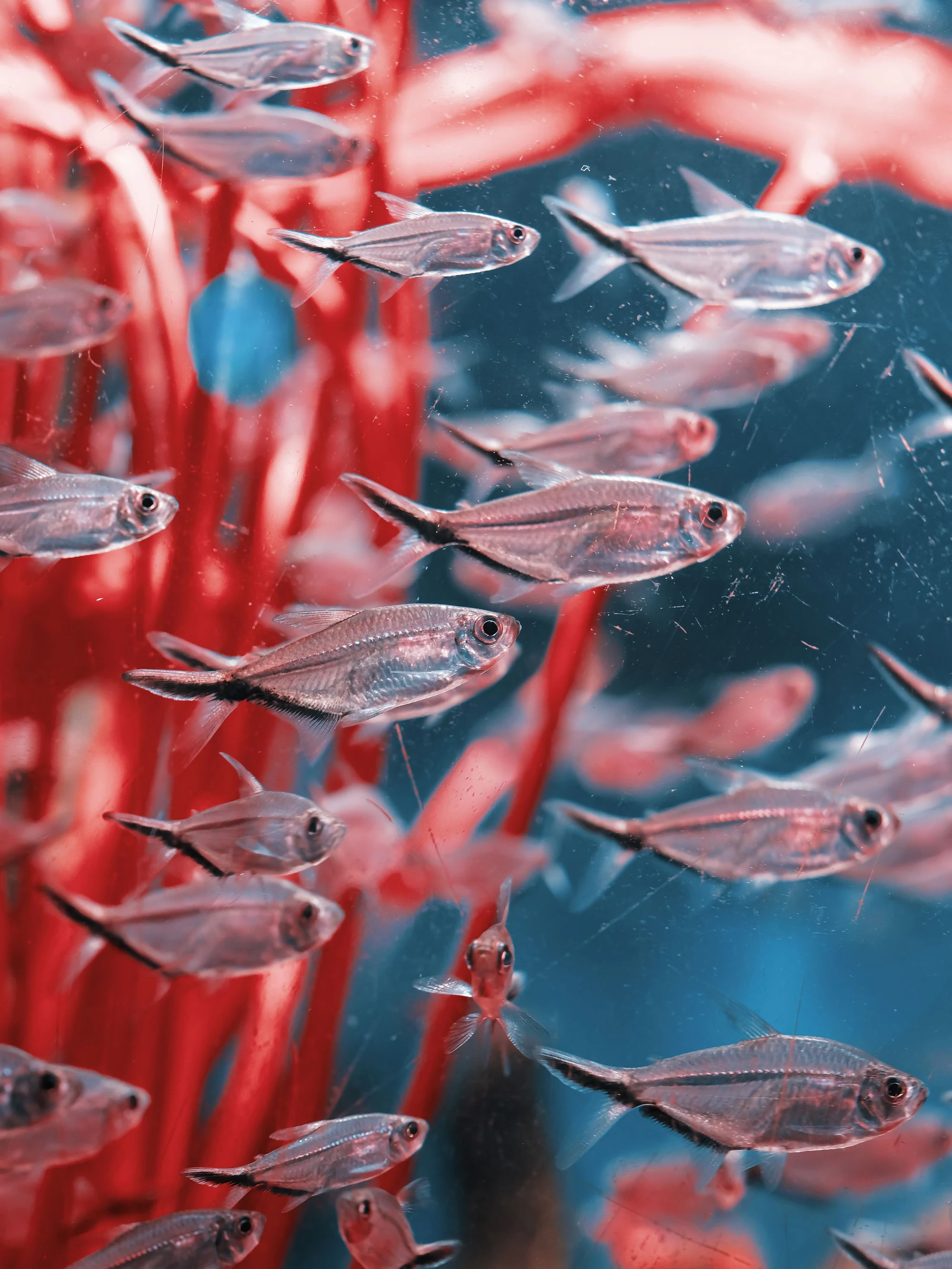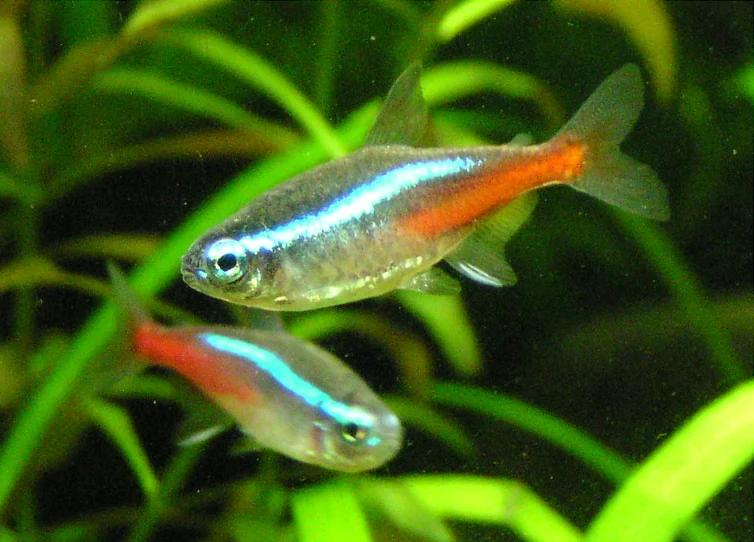
Plan the adult life.
- Temperament
- Shoaling; generally peaceful
- Compatibility
- Small adult size makes predation a real concern. Check the eventual size and behavior of every proposed companion.
Plan room and maintenance for a same-species group, not just one small fish. A small body does not make an uncycled or crowded aquarium suitable.
Start with a sourced care baseline.
Use these published care baselines to start a plan. Read each scope note: group guidance, captive-bred stock and mixed aquariums are not interchangeable. Change water conditions gradually with appropriate advice, not merely to match a number on a page.
- Shoal planning reference
- OATA tetra guidance: at least 5, with more preferredOATA · source guidance ↗
Scope & planning notes
Group-level tetra/pencilfish husbandry guidance, not a neon-specific optimum.
Plan a same-species shoal and the space for it. Do not represent five as an experimentally established ideal.
- Small-tetra housing reference
- OATA: at least 45 L for a small shoal of a smaller speciesOATA · source guidance ↗
Scope & planning notes
A conditional small-tetra planning baseline. The page explicitly identifies neon tetras as a smaller species.
It specifies neither a neon-specific tank length nor a complete community capacity. Swimming room, group size and companions still govern the plan.
- Companion limit
- Keep away from fish large enough to eat themOATA · source guidance ↗
Scope & planning notes
The page explicitly names neon tetras in this warning.
A generally peaceful label does not prevent predation by a larger fish.
OATA's 22–27°C, pH6.5–8.0 and hardness ranges explicitly cover a mixed tetra/pencilfish group. They are not copied as exact neon-tetra targets. Aqueon's tetra guide is similarly broad. These current sources support useful shoal/housing rows, but not a precise neon-only chemistry table; do not manufacture that precision.
Check the identity
Paracheirodon innesi is a freshwater fish from the upper Amazon region. Confirm the scientific name rather than assuming that every fish sold with neon in its name is this species. Similar common names do not establish identical needs.
Sources: U.S. Fish and Wildlife Service ↗
Plan a group with shelter and room to swim
Tetras are shoaling fish. Give the group clear swimming space and planted cover, and maintain a cycled, filtered aquarium with stable conditions. OATA's tetra guidance is group-level advice, so confirm the particular stock's requirements before purchase.
Feed and observe at their scale
Use food in particles the fish can take and watch the whole shoal during feeding. Check water quality routinely, especially after stocking changes. Evaluate larger companions with predation in mind rather than relying on a broad community-fish label.
Sources: Ornamental Aquatic Trade Association ↗ U.S. Fish and Wildlife Service ↗ Aqueon / Central Aquatics ↗
Before you bring one home.
Is the aquarium mature, suitable for a shoal and free of companions likely to treat these small fish as food?
A concise species introduction, not a complete breeding, treatment or stocking plan. Sources are linked by section. Exact water and housing targets require species-specific planning.
- U.S. Fish and Wildlife Service: Neon Tetra Ecological Risk Screening Summary ↗Paracheirodon innesi identity, freshwater environment, upper-Amazon origin, small body and natural diet.
- Ornamental Aquatic Trade Association: How to look after tetras and pencilfish ↗Shoaling, cover, swimming space, mature filtration, suitably sized food and routine water-quality monitoring.
- Aqueon / Central Aquatics: Angelfish Care Guide: behavior and compatibility ↗A concrete reason a larger community fish can threaten smaller fish: angelfish may consume fish that fit their mouths.