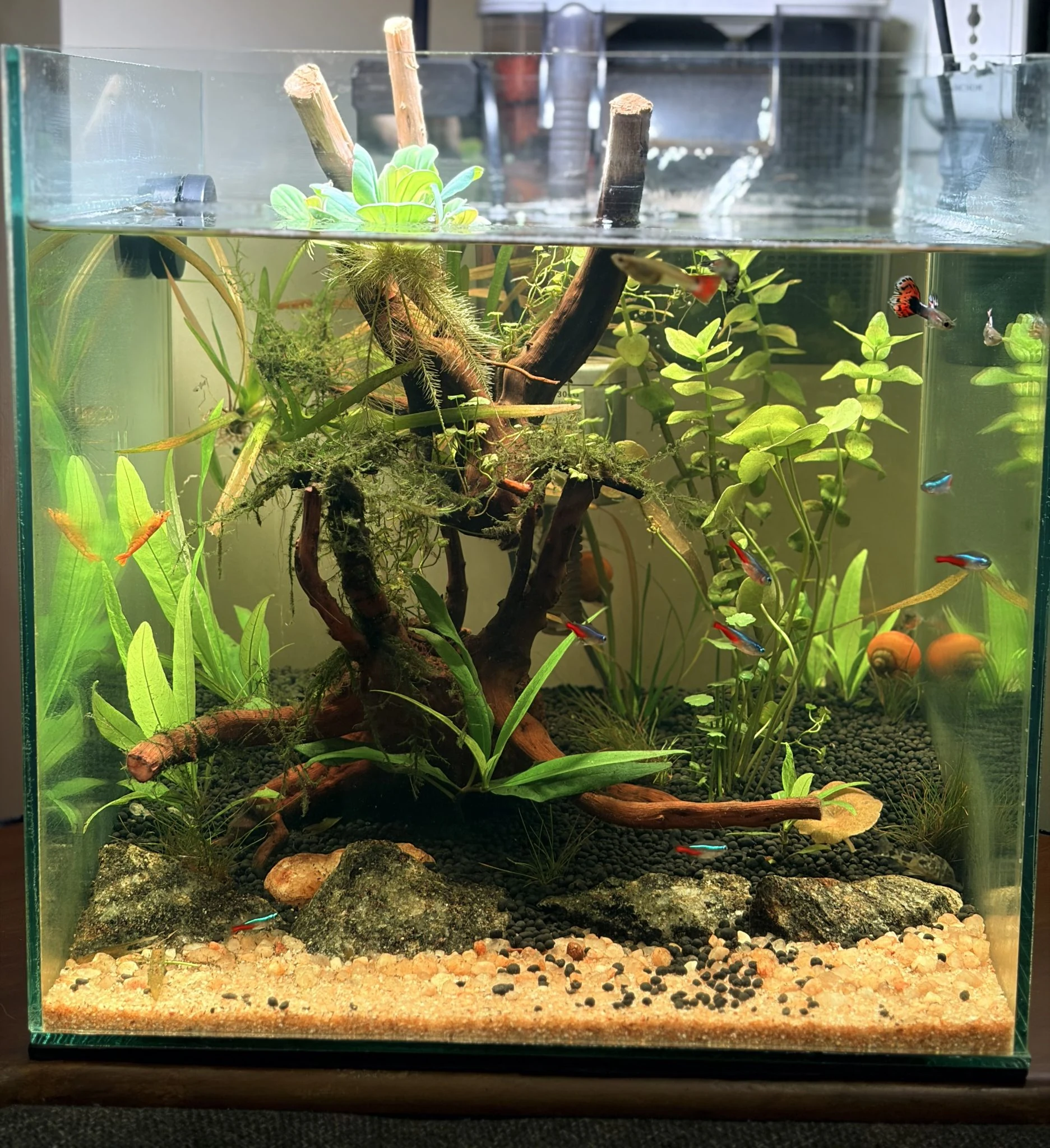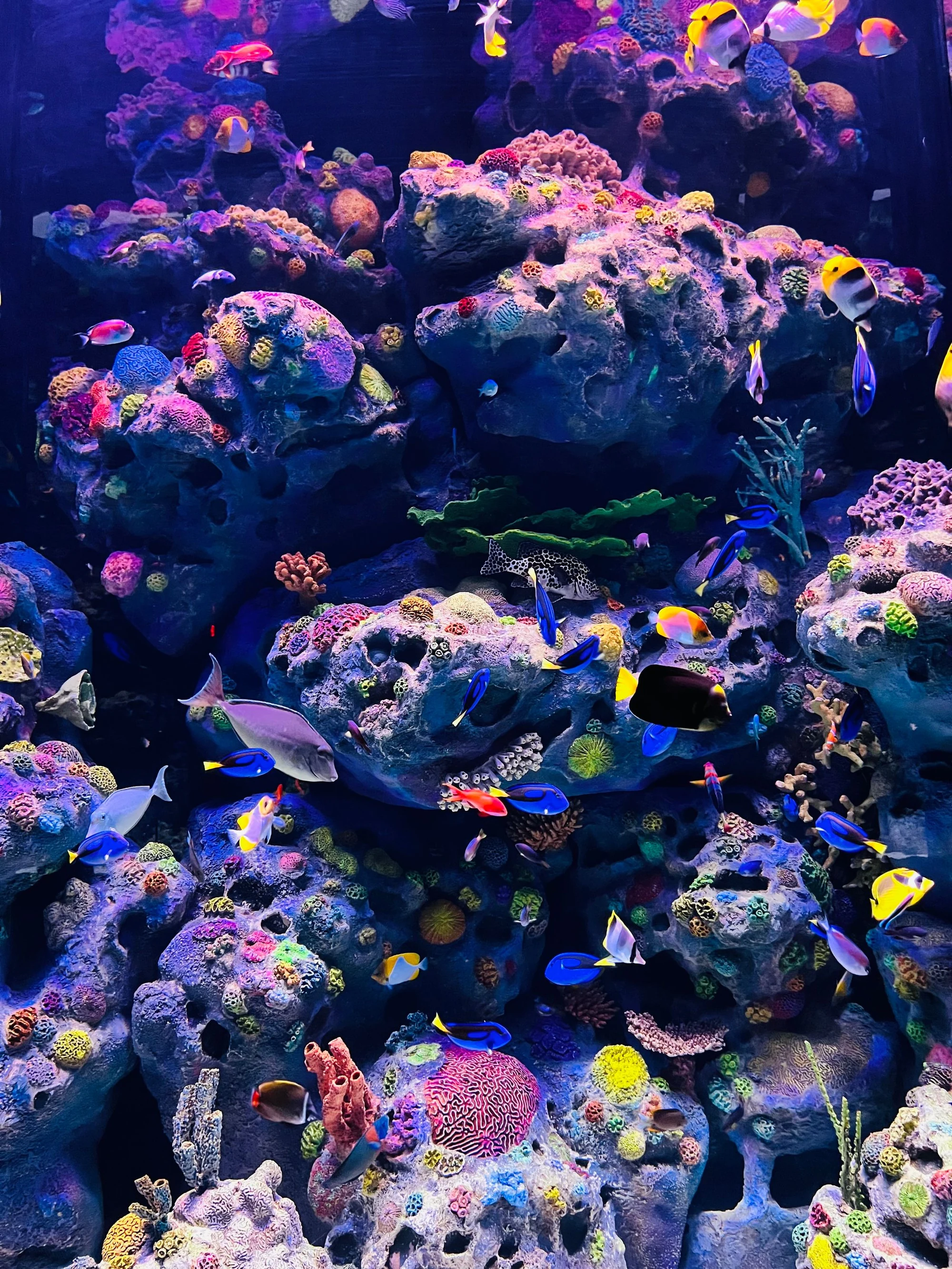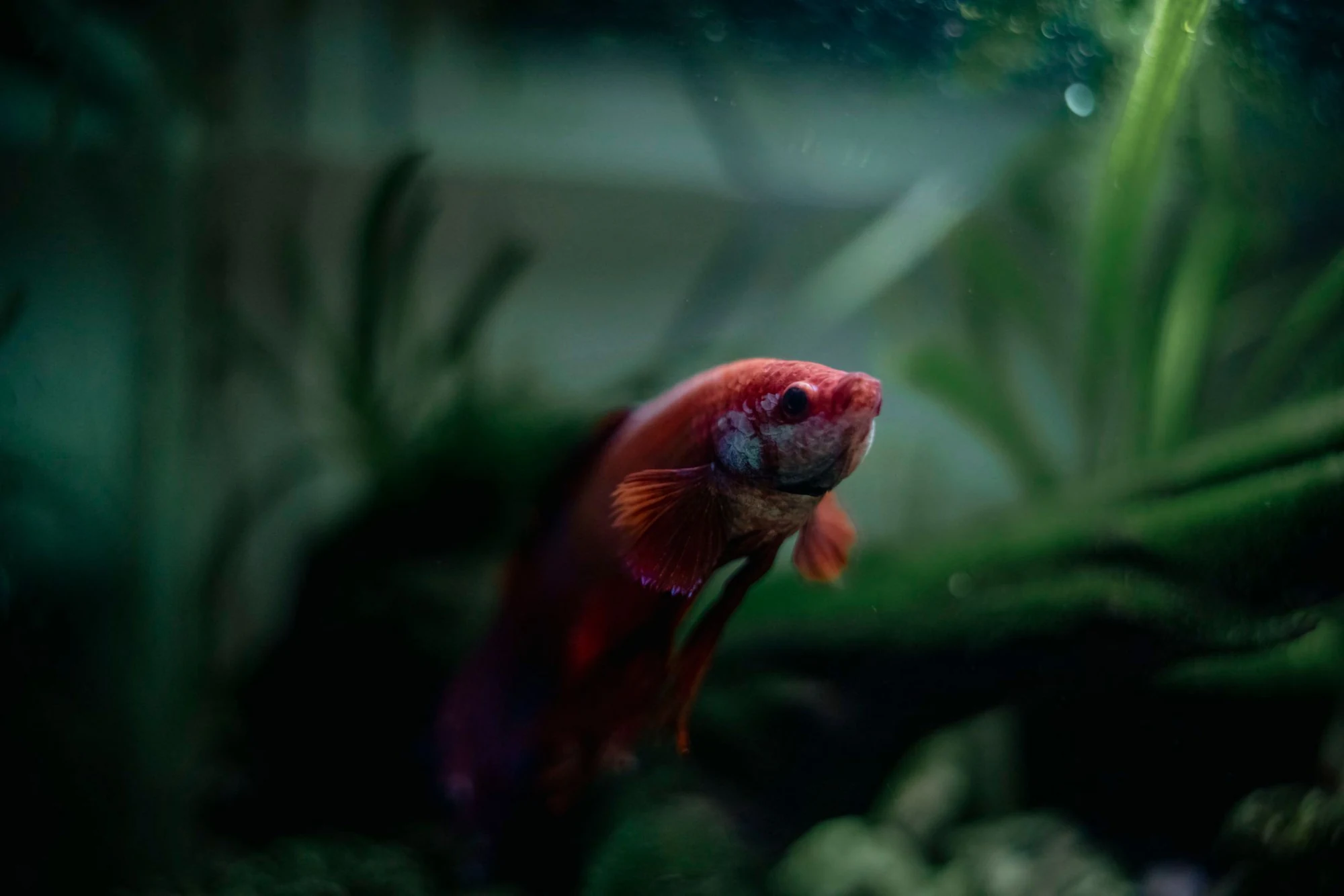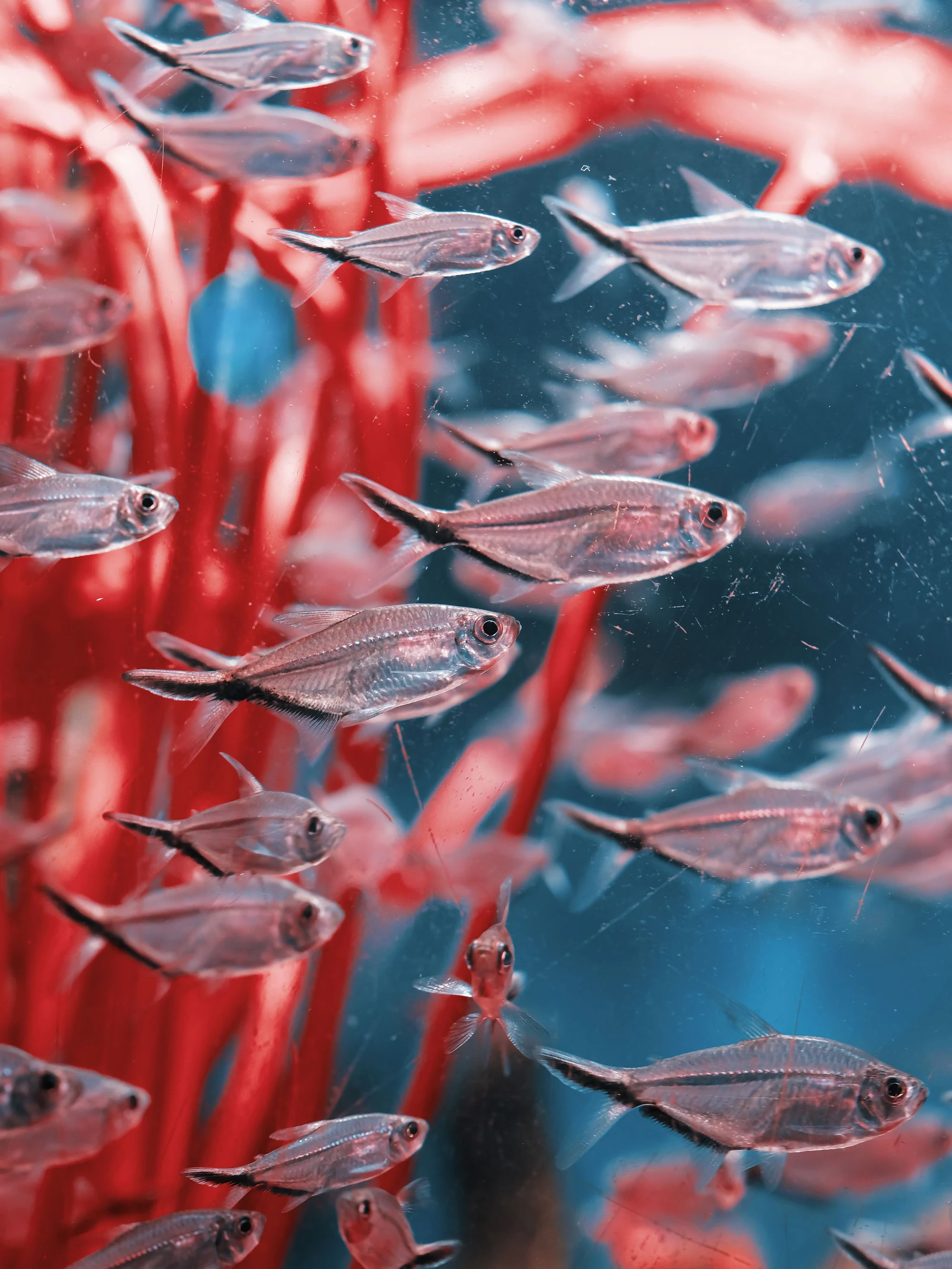
Identify the fish beyond the shop label.
Ask for the exact species and, where relevant, the variety. Record adult size and expected lifespan. A broad name such as pleco, shark or cichlid can cover animals with very different needs. If identity is uncertain, leave the fish on the shortlist until you can verify it.
Sources: RSPCA ↗
Find a real overlap in water needs.
Compare temperature, pH and hardness requirements with your measured source water. Keep only combinations whose needs can genuinely be met together. Shared freshwater or tropical labels do not guarantee a match. Ask a knowledgeable retailer about the actual fish's source conditions before planning acclimation.
Budget for behaviour and space.
Research whether the species needs a group, territory, open swimming room or shelter. Plan the complete social group rather than buying a token pair to see what happens. Consider predation, fin-nipping and competition. Extra filtration cannot create missing swimming space or make incompatible behaviour disappear.
Check who will get the food.
Compare diet, feeding level and activity time. A fast feeder can leave a slower fish hungry even when the tank receives plenty of food. Do not buy a fish simply as an algae or waste-removal service; it has its own diet, space and lifelong care needs.
Make the last decision at the shop.
Observe the fish and the aquarium it shares. Ask about origin, recent arrivals and health concerns. Decide the introduction and quarantine plan before paying. If your aquarium is not ready or a care requirement remains unclear, waiting is a successful decision. Plan responsible rehoming if circumstances later change; never release aquarium animals into the wild.
Sources: RSPCA ↗ Merck Veterinary Manual ↗ OATA ↗
This is a decision framework, not an approved stocking list or species database. Behaviour can change with age and breeding; compatibility needs observation as well as research.
- RSPCA: Keeping fish as pets ↗Different species have different needs; inspect retailer tanks and fish; lifetime responsibility. A fixed two-week readiness promise is deliberately not used.
- RSPCA: Keeping fish together ↗Species-specific social needs, compatibility, food competition and water hardness. No universal group number is inferred.
- OATA: Test freshwater aquarium water ↗Test rather than judge clarity; ammonia/nitrite, nitrate, pH and hardness; species-specific nitrate requirements; source-water chemistry and partial water changes.
- RSPCA: Choosing an aquarium ↗Adult size, swimming space, placement, working filtration and fishless cycling. No generic tank-size or stocking-length formula copied.
- RSPCA: What to feed your fish ↗Food and feeding location depend on species; avoid overfeeding; responsible holiday checks and pre-portioned instructions. Universal meal frequency is not copied.
- Merck Veterinary Manual: Management of aquarium fish ↗Fishless cycling, quarantine with separate equipment, clinical history, and careful correction of long-neglected water. Clinical drug, salt and treatment protocols are outside this pack.